


![]()
High-Efficiency R2R Production Line
Precise and Durable Touch Solutions
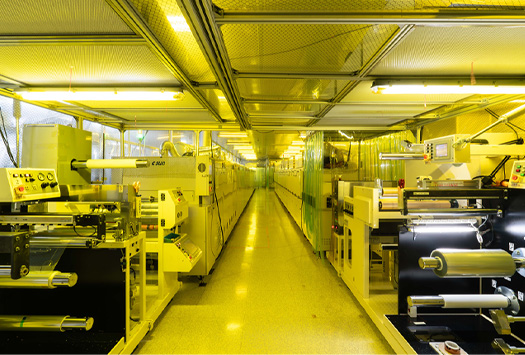
Building a Mass-Producible and Traceable Touch Supply Chain with Continuous Automated Processes
We operate an industry-leading roll-to-roll fully automated production line, which serves as the core foundation of our one-stop integrated manufacturing services. Through continuous processing and reduced manual intervention, we effectively enhance process stability and delivery consistency, while supporting a competitive cost structure and reliable supply capacity (up to 580K units per month, depending on product and schedule).
Quick Overview
- Production Capacity: Up to 580K units per month (depending on product type and production schedule).
- Process Features: Continuous automated processing reduces manual intervention and improves consistency.
- Supported Capabilities: Precision circuit patterning, narrow bezel processing, mass production delivery.
- Delivery Support: Sampling plans, inspection data, and traceability information available upon project request.
What Pain Points Does the R2R Production Line Solve?
- Minimizing Batch Variances for Enhanced Consistency:
The continuous manufacturing process stabilizes key parameters and reduces fluctuations caused by manual operations. This provides a significant advantage for high-volume deliveries and ensures superior consistency across different batches. - Boosting Production Efficiency to Relieve Lead Time Pressure:
Automation and continuous processing increase throughput (tact time) efficiency, supporting supply stability for high-demand projects and urgent schedules. - Supporting Fine-Line Circuitry and Narrow Bezel Designs:
By leveraging precision processing and non-contact manufacturing capabilities, R2R technology supports finer circuitry and higher spatial utilization, meeting the demands of modern slim-bezel aesthetics.
Annealing / Pre-heating
Description: Pre-heating treatment for film materials. Advantages: Eliminates internal material stress and enhances dimensional stability, ensuring high precision for subsequent printing/patterning processes.
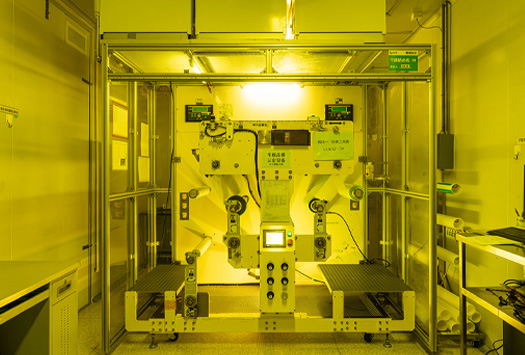
Dry Film Lamination
Description: Laminating photosensitive dry film onto the substrate surface. Advantages: Establishes a foundation for high-resolution circuitry patterns and ensures the structural integrity of the sensor.
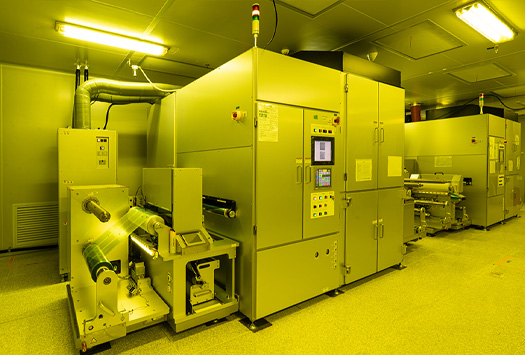
Exposure
Description: Transferring precision circuit patterns using yellow light photolithography technology. Advantages: Achieves micron-level precision in circuit design, meeting the requirements for high-sensitivity touch performance.
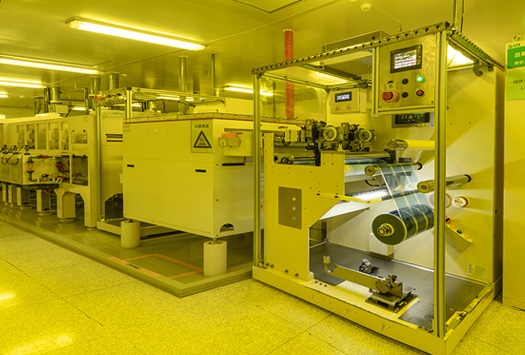
Developing
Description: Removing excess material through a developing process. Advantages: Precisely defines the circuit patterns, ensuring stable and consistent electrical performance.
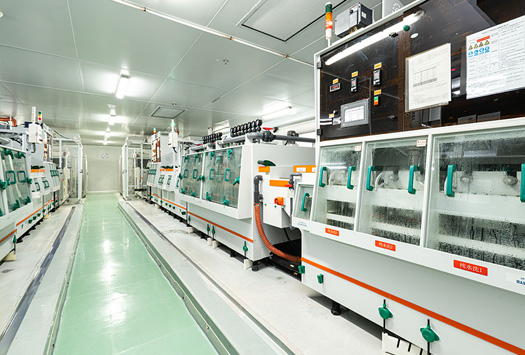
Etching
Description: Removing excess metal layers to define the conductive paths. Advantages: Ensures clear conductive traces without short circuits, maintaining high transparency and superior electrical performance.
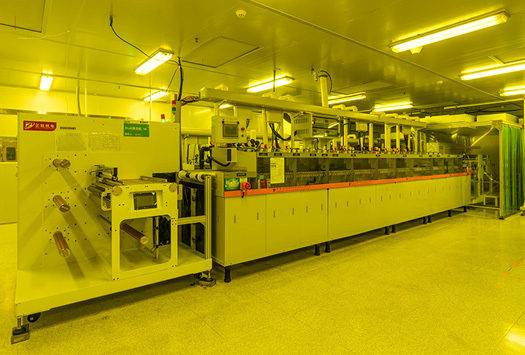
Cleaning
Description: Removing excess metal layers to define the conductive paths. Advantages: Ensures clear conductive traces without short circuits, maintaining high transparency and superior electrical performance.
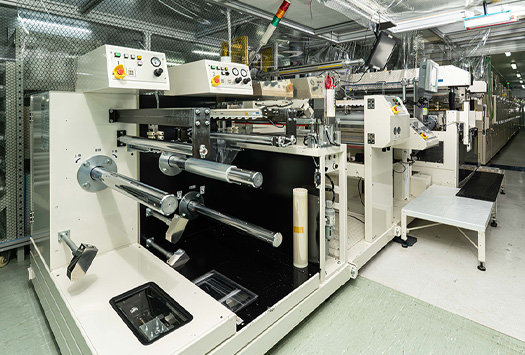
Circuit Printing
Description: Utilizing high-efficiency R2R lines for circuit pattern printing. Advantages: Continuous production significantly boosts capacity (580,000 units/month), effectively reducing unit production costs.
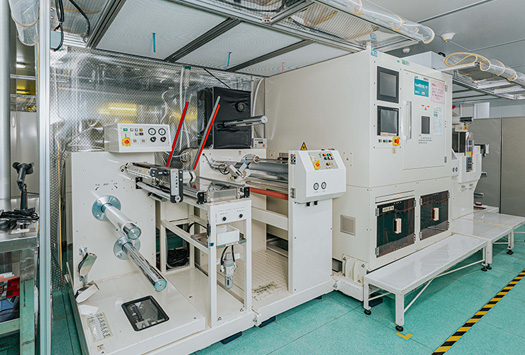
Laser Patterning & Cutting
Description: Utilizing high-precision lasers for circuit trimming and substrate cutting. Advantages: Non-contact processing prevents physical damage, enables ultra-narrow bezel designs, and optimizes spatial utilization.

